

(and how to close it)
For PowerWash.com pros | Spring 2026
There’s a residential job picking up in volume right now that most contractors are still underpricing, undersizing, or losing to the kid down the street with a borrowed pressure washer.
It’s not a new service. It’s roof cleaning. What’s new is who’s driving the demand — and how.
The opportunity: your insurer is doing the cold-calling
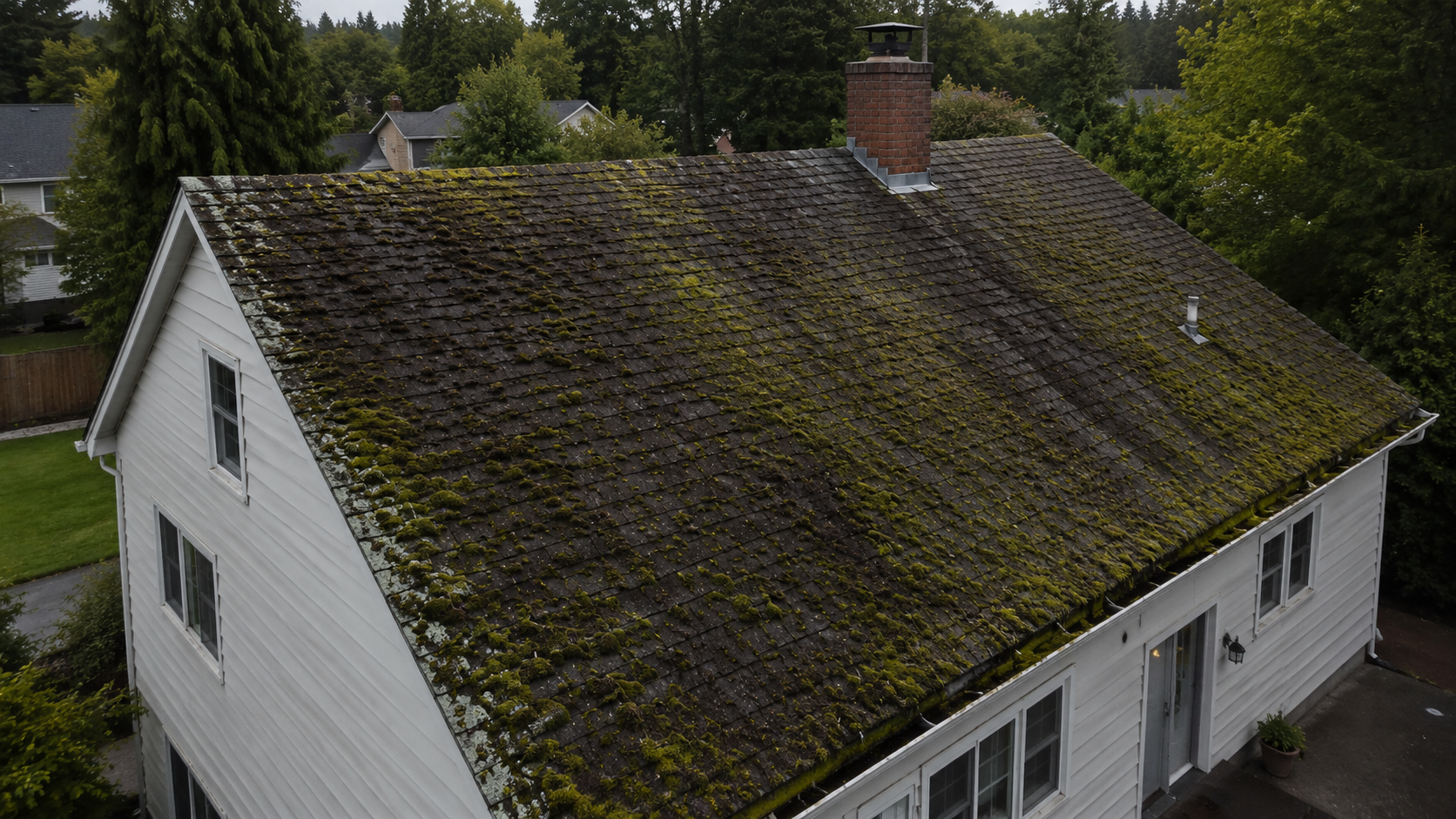
Across California, Florida, the Pacific Northwest, and the Gulf states, homeowners insurance carriers have rebuilt their underwriting around aerial imagery. Drones. Satellites. Software that scans every property on the book and flags anything that looks like deferred maintenance.
Moss, algae streaks, lichen colonies — all of it now reads as “elevated risk” to an underwriter. When the software flags it, the homeowner gets a notice with a deadline: clean it in 30 to 60 days, send proof, or your policy gets cancelled or non-renewed.
That homeowner is calling you with three things every contractor wants on an incoming call:
- A problem they can’t put off
- A real budget already approved
- A deadline that closes the conversation
This is happening at scale and accelerating. MoneyGeek and ARMA have both flagged it as a 2026 trend. California carriers in particular have tightened standards aggressively in the past two underwriting cycles.
If you run a residential exterior cleaning route, you’re getting this call. The only question is whether you sound like the licensed pro who handles it weekly, or the contractor still figuring out how to quote it.
What the homeowner already knows — and what they don’t
The homeowner reading the notice knows two things: they need this fixed, and they have a hard deadline.
They don’t know:
- Whether pressure washing will void their roof warranty (it will)
- Whether they need a licensed contractor (in California, any exterior job over $1,000 legally does)
- What “proof of corrective action” the insurer actually wants (before-and-after photos and a record of work performed)
- Why the cheap roof-wash quote from the unlicensed competitor is going to bite them in 12 months
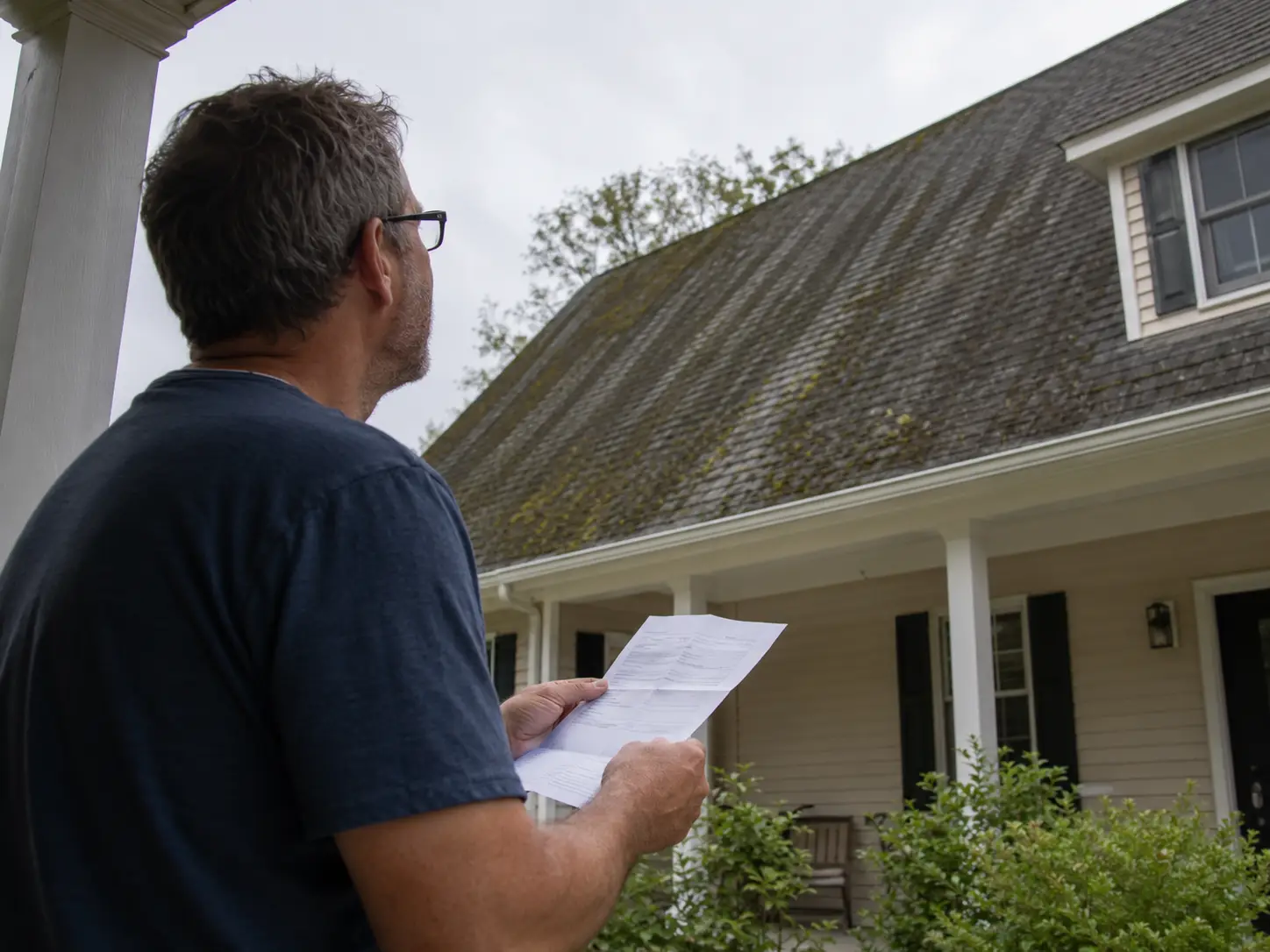
Your job on the call isn’t to sell cleaning. It’s to sell the answer to all four of those unknowns. Coverage saved, warranty intact, file closed, problem gone for a decade. That’s the offer.
Why pressure on a shingle roof is the wrong play
Every roof call comes back to the same homeowner question:
“Why can’t I just pressure wash it myself?”
Here’s the answer, in language a homeowner gets:
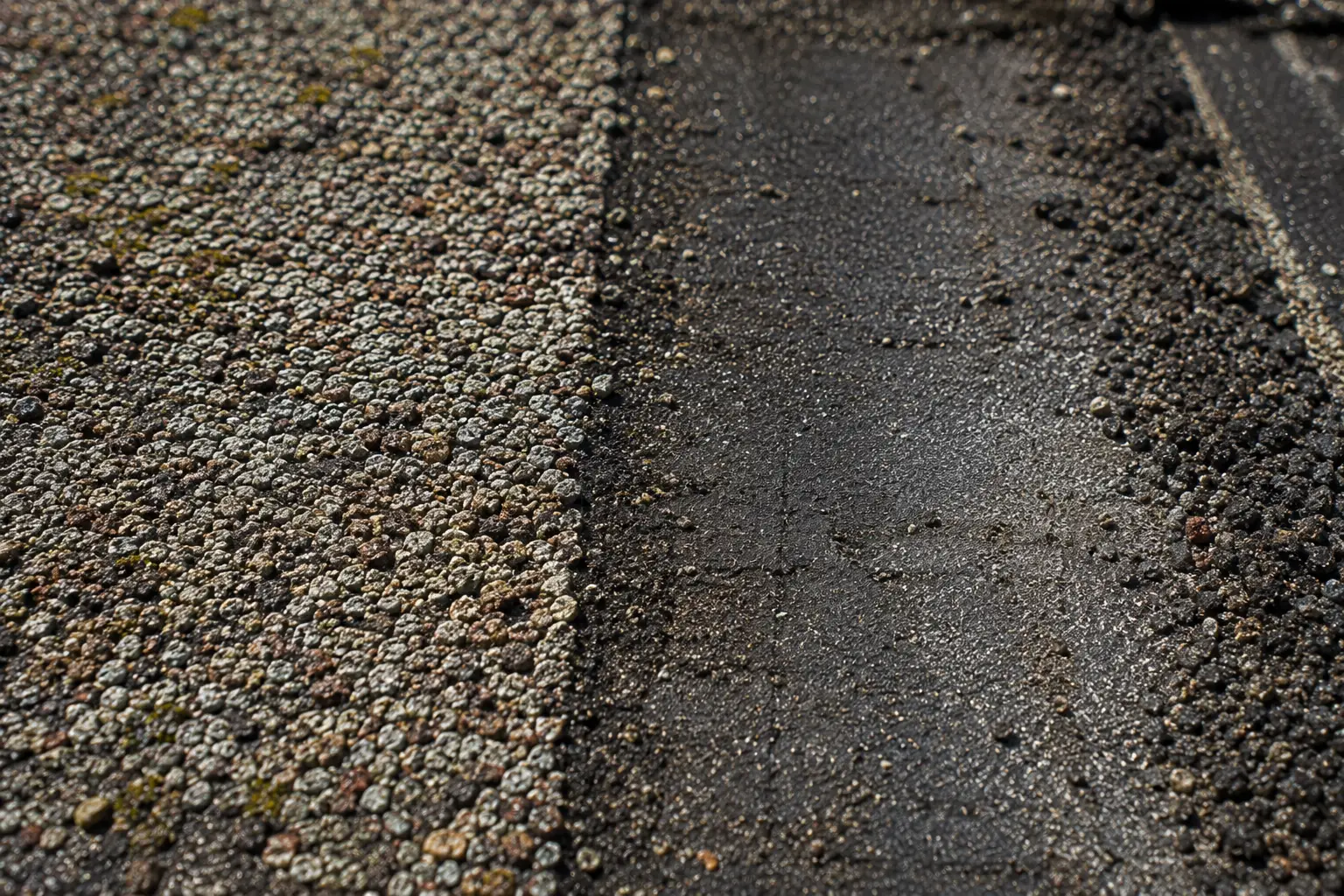
Pressure washing strips granules off asphalt shingles. Those granules are the UV protection layer — pull them off and you’ve cut 5 to 10 years off the roof’s life and likely voided the manufacturer warranty. On concrete tile, high pressure permanently alters the finish, color, and porosity. The surface gets more porous, which means it holds moisture longer, which means the same algae you just blasted off grows back faster.
You don’t have to take our word for it. ARMA — the Asphalt Roofing Manufacturers Association — explicitly warns against pressure washing in its official technical bulletin on algae. GAF’s R-102 bulletin says the same thing. So do Owens Corning, CertainTeed, and Malarkey. Every major shingle manufacturer is aligned on this.
If a homeowner sends an insurance reinstatement letter with pressure-washed evidence and the carrier checks for warranty compliance — which they increasingly do — the cancellation gets upheld and the roof has to be re-cleaned the right way. That’s a refund call and a reputation hit you don’t want.
The right method, with specs
The method GAF, ARMA, and most major manufacturers recommend is non-pressure, detergent-based cleaning — what the industry calls soft washing. The mechanics:
- Application pressure: under 500 PSI at the nozzle. You’re applying chemistry, not blasting surfaces.
- Mix: sodium hypochlorite (12.5% pool-strength is the working baseline) diluted with water, plus a bleach-stable surfactant for cling and dwell.
- Dwell time: 15 to 20 minutes of contact on the biological growth before rinse. This is the part that does the actual work.
- Rinse: gentle, low-pressure water. No scrubbing — friction loosens granules even at low pressure.
- PPE: eye protection and chemical-resistant gloves, every time. Cover landscaping and run drip control on downspouts.
Done properly, this kills the algae, lichen, and bacterial colonies at the root — not just the visible part on top of the shingle. That’s why a real soft wash holds for 4 to 10 years. Pressure-wash redo’s on the same property are typically back in 12 to 24 months because the spore was never killed; the surface just looked clean for a season.
You should be telling the homeowner that holding period out loud. It’s the single best argument against the unlicensed bid. Same job, eight years apart vs. same job every year — the math sells itself.
The documentation move (this is what actually closes the file)
Most contractors think the job ends when the rinse is done. On insurance work, that’s the middle of the job, not the end.
What the insurance carrier wants to close out the notice:
- A clear before-and-after photo set, ideally from the same vantage point. Aerial shots if you can — that’s what their inspector pulled.
- A record of the work performed: date, address, services rendered, mix used.
- Confirmation that the work was done by a licensed contractor — your license number on the invoice.
- Your proof of roof-specific liability insurance and workers’ comp.
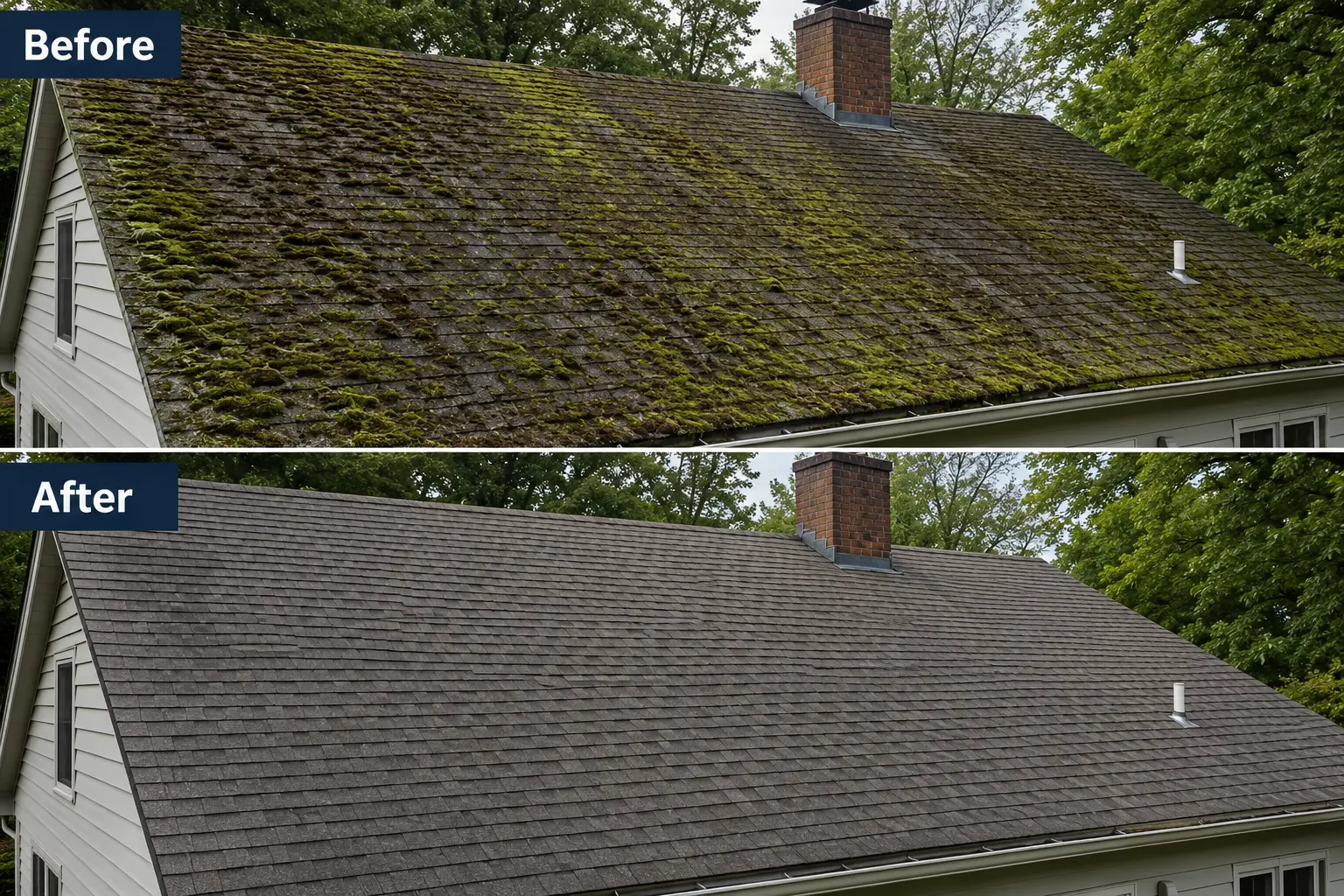
Build that into a standard packet you hand the homeowner the same day the job’s done. Most homeowners have no idea what to send their insurer. If you make that easy, you become the contractor everyone refers — because their neighbor just got the same letter, and they’re going to watch their insurance close out the file in 48 hours.
That packet is your business growth tool, not just a job report.
Your margins
A roof cleaning job on a 2,000 sq ft house, properly soft-washed and documented, runs $400 to $900 in most markets depending on slope, access, and biological load. Chemistry cost is typically under $40 with a properly diluted SH-and-surfactant mix at the right ratios. Crew time is half a day or less for a two-person team.
The recurring component is the part most contractors miss. A soft-wash customer who holds their treatment for 6 to 8 years is also calling you in 18 months for the house wash, the driveway, the patio, and the fleet of cars in the driveway. Roof cleaning isn’t just a service — it’s the door-opener for the rest of the route.
The other piece: insurance-driven calls don’t haggle the way price-shoppers do. They have a deadline. They’re hiring the contractor who picks up, answers right, and can be on-site this week with the right gear.
What goes on the truck
If you’re not already set up for soft wash, here’s the short list for getting your rig to insurance-grade quickly:
- A dedicated soft wash pump or proportioner that meters SH and surfactant at low pressure — so you’re applying a consistent ratio, not eyeballing it from a 5-gallon bucket.
- A bleach-stable surfactant with serious cling. On a sloped roof, a thin mix runs off before the dwell window closes. A surfactant built for soft wash holds the chemistry in place where you put it.
- 12V or air-driven SH-compatible chemical pumps — pool-strength bleach destroys standard equipment fast. Use the right materials.
- A scent and marker additive like Apple Blossom. The marking dye shows you exactly where you’ve sprayed (and shows the homeowner you’ve covered every facet). The apple scent masks the bleach smell — your customer’s house smells like apples for the rest of the afternoon, not pool chemicals.
- A decent camera. Phone camera is fine. Take the photo from the same angle, same time of day, every job.
That’s the kit. American-built, contractor-grade, and we’ve been outfitting power washers for this work since 1973.
The roof-cleaning job has shifted from a cosmetic upsell to an insurance necessity. The contractors who set their rigs up right — and explain it right — are taking the calls. The ones still pressure-washing shingles are losing the work, voiding warranties, and getting refund calls a year later.
If you want help speccing the soft wash setup for your operation — one truck or four — reach out. Real contractors, real job decisions. Orders ship Ground and typically arrive within 5 business days.
Fifty years in the trade. Built for power washers.